
Choosing the right welding glove isn’t always about picking the “best” pair—it’s about picking the one that works across the variety of tasks your day demands. From delicate TIG work to heavy MIG or stick welding, and even handling a hot grill or backyard forge, your hands face different hazards, temperatures, and precision requirements. This guide walks you through how to assess risks, read a glove at a glance, and make practical choices that balance heat protection, dexterity, and comfort. Whether you’re rotating between workstations or hobbies, the right glove strategy keeps your fingers safe and your workflow smooth.
Why One Glove Style Can’t Be “Best” for Everything
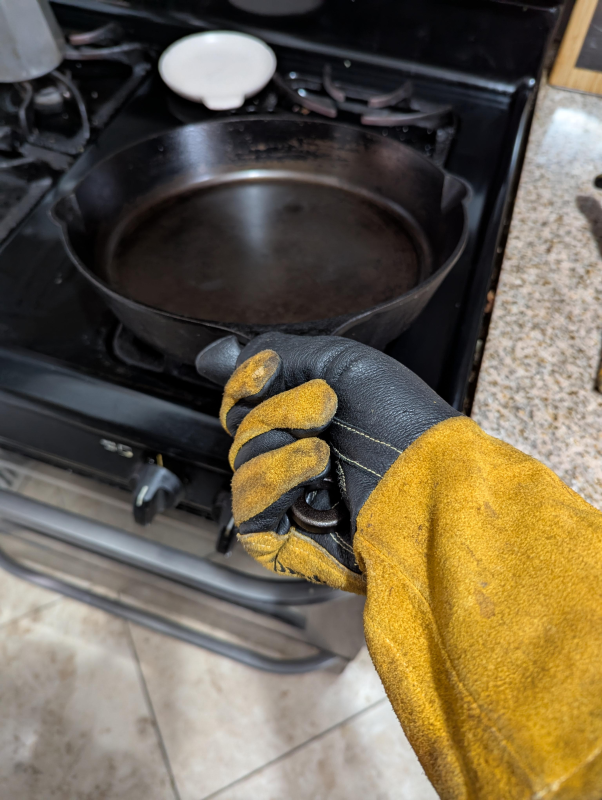
Let’s be blunt: a single pair of welding gloves won’t be perfect for every job. TIG wants fingertip feel. Stick wants armor. BBQ wants heat-blocking and dexterity for flipping. The double-layer cowhide design sits in the middle: it’s heat resistant, tough, and long enough to protect your forearm on most chores. In practice, that balance makes it a strong daily driver for people who do different things in one day. Not ideal for boutique precision, but very good for mixed work.
Read the Task, Then Read the Glove: A Quick Decision Script
Before you put a welding glove on, run this mental checklist. It’s fast. It keeps you out of trouble.
Step 1: What’s the Dominant Hazard?
- Sparks and short contact heat? (welding, BBQ) → Double-layer cowhide is likely fine.
- Steam, prolonged radiant heat, or going inside structures? → Not ideal; choose specialized gear.
Step 2: How Precise Does Your Hand Need to Be?
- High precision (TIG) → you’ll notice the glove’s thickness immediately. Consider switching to a thinner pair for the fine work portion.
- Moderate precision (MIG): thicker gloves that still allow wrist flex are acceptable.
Step 3: Duration
- Short, intense handling bursts—the welding glove’s heat resistance matters.
- Long continuous exposure → comfort and breathability start to matter as much as raw heat blocking.
These three simple questions steer the choice better than specs alone.
The Anatomy That Matters
You can read a welding glove quickly if you know where to look. Here’s the real-world primer.
- Leather Type: Cowhide provides abrasion resistance and decent fingertip feedback. It also handles repeated sparks without glazing over too quickly.
- Double-Layer Construction: That second layer buys time against higher temps; it’s the difference between “ouch” and “manageable” during a short hot contact.
- Seam Placement: Seams that avoid the fingertips and bend points keep dexterity. A seam across a knuckle = annoyance.
- Cuff Length: Long cuffs protect forearms—crucial when you’re leaning over a grill or handling hot billets.
- Inner Lining: A soft, sweat-absorbing lining helps for long shifts; it’s about comfort, which turns into safer work when people don’t fidget.
Check these in the morning, not after you’re sweating and irritated. Small inspections save fingers.
Process-Minded Trade-Offs
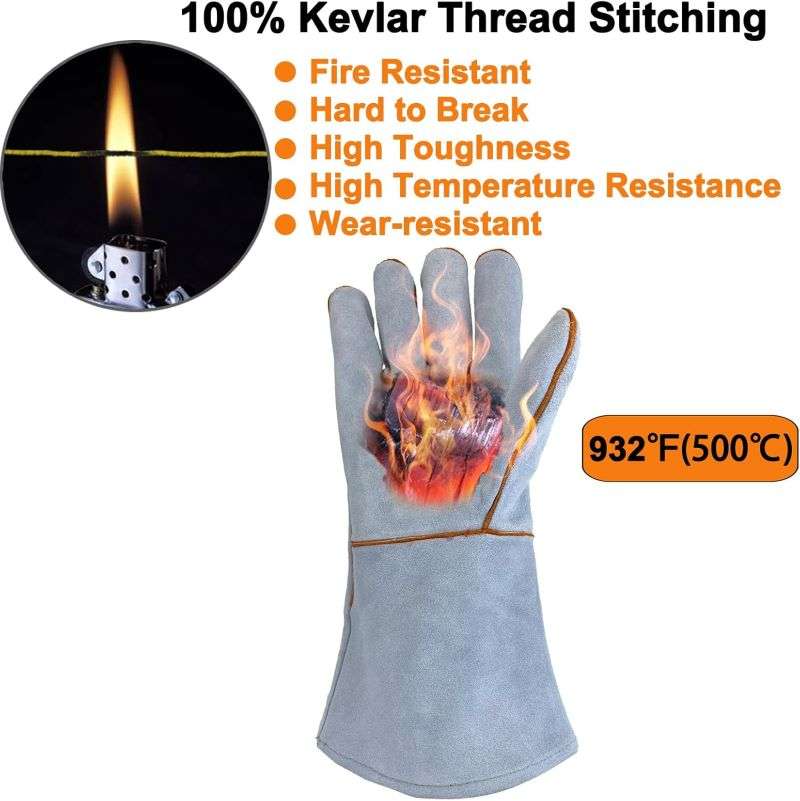
- TIG: If you care about the small bead and delicate filler, the glove’s thickness fights you. Do warm-up runs with the welding glove. If the discomfort costs you control, swap to a thinner pair for TIG and go back to the cowhide for everything else.
- MIG: This is where the double-layer cowhide shines. Spatter resistance and cuff length make it good for longer seams. You’ll trade a bit of tactile nuance for staying unburned. Worth it, usually.
- Stick: Heavy duty. The seam and cuff take the hits. If the welding glove’s seams are robust, it’ll last; if not, you’ll find weak points fast.
- BBQ & Home Tasks: The glove handles grill grates, hot lids, and coals surprisingly well. It’s long, heat resistant, and leather ages nicely—it looks lived-in rather than falling apart.
In short: rotate when precision counts. Otherwise, let the cowhide do the heavy lifting.
Final—Who Should Consider This Glove Style?
This welding glove type is for people who switch hats during the day. You’re a metalworker who tends a grill at closing; you’re a hobbyist who does both auto and backyard forge work; you’re a small shop where everyone shares tasks. The Cowhide Model is long, durable, and heat resistant enough to make most of your day less risky. It won’t replace a precision TIG or a firefighter’s turnout glove, but it will get you home with your fingers intact.
Wear it with awareness. Swap when the job asks for it. Keep the rituals. Treat the welding glove like a coworker—look after it a little, and it’ll look after you.