
Welding gloves look simple: leather, padding, a long cuff. But there’s quiet engineering in that simplicity. This article pulls apart the mechanisms that keep hands safe—such as thermal barriers, conductive pathways, seam design, and material fatigue. By the end you’ll see why one pair of welding gloves can be perfect for a short, furious tack weld but not for an all-day job by the forge.
What “Protection” Actually Means
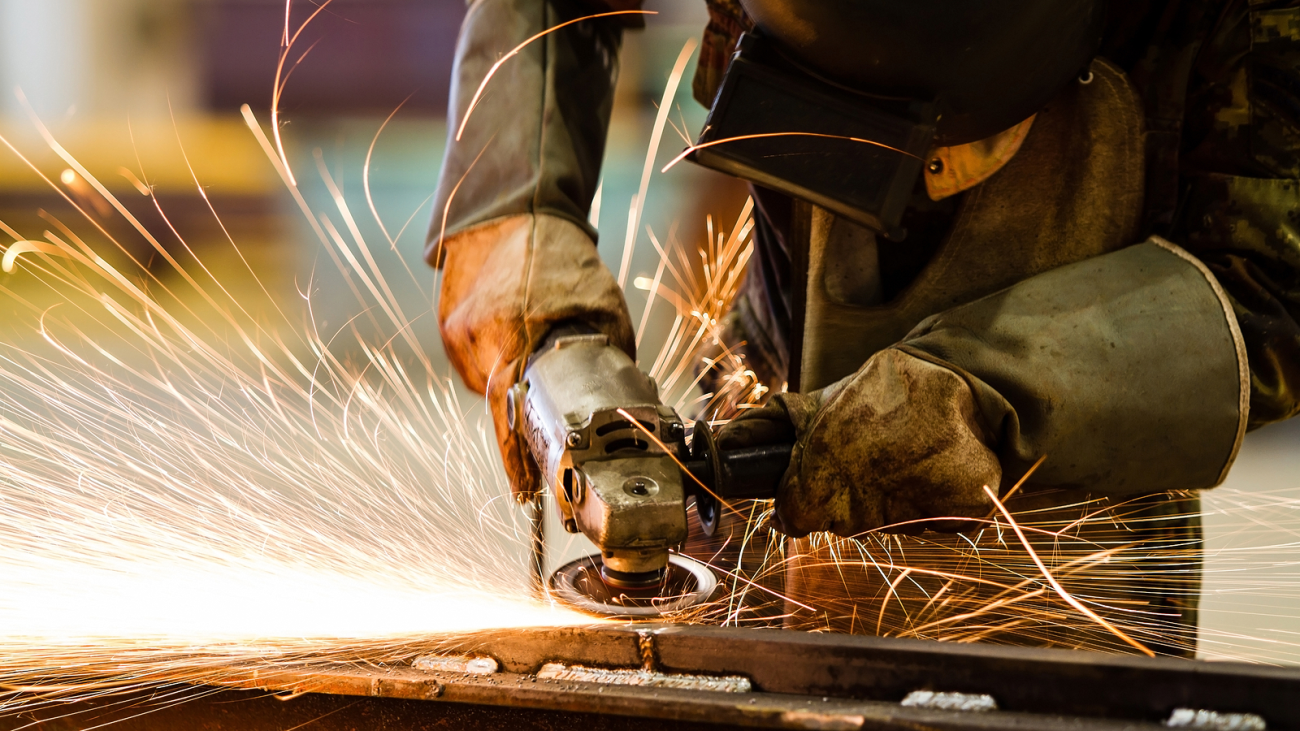
When we say welding gloves, we mean gear that manages three threats: direct contact heat, radiant heat, and mechanical hazard. Different materials and constructions address each threat in different ways. Good welding gloves balance those factors, trading bulk for flexibility as needed.
Welding gloves protect by slowing heat transfer. The outer leather layer resists flames and spatter; inner liners create an insulating air gap. The trick: insulate enough to delay heat, but not so much that the glove traps sweat and ruins grip.
Heat Transfer—Three Modes, Three Defenses
Heat reaches your hand by conduction, convection, and radiation. Each mode needs its own countermeasure.
- Conduction: touching a hot surface. Thick leather and a cotton liner reduce conductive flow. Welding gloves are thickened in high-contact areas such as the thumb, palm, and fingertips to prolong the time it takes for dangerous temperatures to reach the skin.
- Convection: hot air and gases flowing past the hand. Breathable fabric or perforated leather backing allows air to circulate. That’s why some welding gloves use a leather palm but a fabric back for longer sessions.
- Radiation: intense radiant heat from a torch or hot metal. Reflective layers or outer finishes can reduce radiant gain. Not all welding gloves have this, but specialized models do.
Materials: Why Cowhide Still Rules
Cowhide leather is common because it balances heat-resistant performance, abrasion resistance, and cost. Grain structure in cowhide creates natural insulation and durability. Split leathers or goatskin feel softer but can trade off some long-term wear. Many top-tier welding gloves use double-layer cowhide in critical areas to give both toughness and delay time against hot contact.
Welding gloves with two leather layers and a soft cotton liner can survive brief contact with red-hot metal that would penetrate thin gloves quickly. But beware: “survive” is seconds—not minutes.
Seams, Stitching, and Real Weaknesses
People focus on leather thickness, but seams are where gloves fail. A seam across a knuckle or thumb sees repeated flexing; over time, stitching frays. Kevlar or heat-resistant thread increases seam life, and seam placement away from high-flex zones preserves dexterity. Look for welding gloves with reinforced thumb patches and riveted stress points for the best durability.
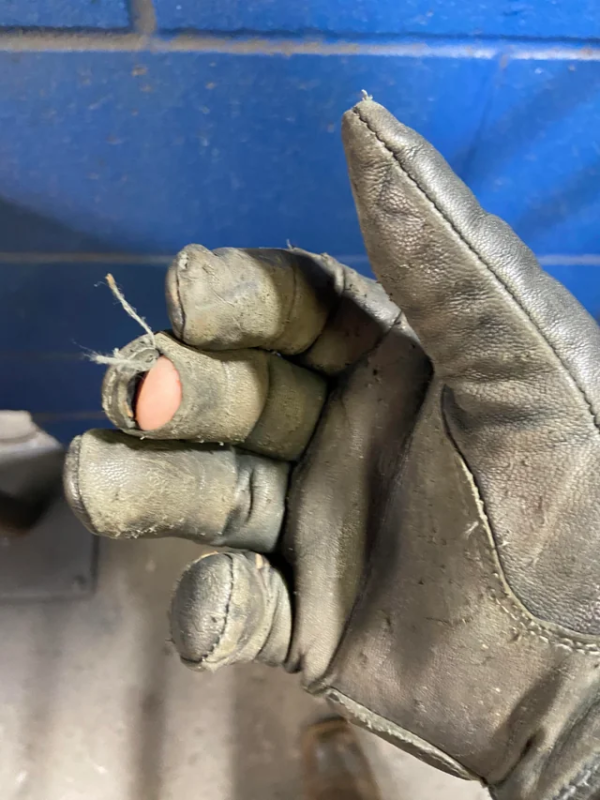
A seam failure can expose skin to spatter or let hot bits slip into the glove—so seam quality is as important as leather weight.
Ergonomics vs. Protection: The Constant Compromise
Heavier gloves give more resistance to heat and spatter but reduce feel. For TIG work you want a light, flexible glove; for heavy MIG handling or furnace tasks, a long, robust welding glove model is smarter. Matching glove type to task reduces mistakes and fatigue.
This is why many pros keep two pairs: a nimble leather-palm glove for precision and a long, double-layer cowhide pair for hot handling.
Failure Modes and Lifecycle
Heat cycles, grinding sparks, oil contamination, and repeated flexing all age a glove. Leather hardens, liners compress, and seams abrade. Inspect welding gloves monthly for thin spots, cracked leather, and loose stitching. Replace before visible cracks appear; the failure often happens quickly once degradation starts.
A retiring glove is best repurposed for low-risk tasks—never extend a compromised glove for hot work.
Practical Takeaways
- Thickness and double-layer construction in palm and thumb. Good welding gloves place extra leather where it matters.
- Kevlar-sewn seams and reinforced stress points.
- A breathable back if you do long shifts—reduces sweat buildup.
- Cuff length that overlaps your sleeve—long cuffs matter for forearm protection.
Durable and Safe Welding Gloves
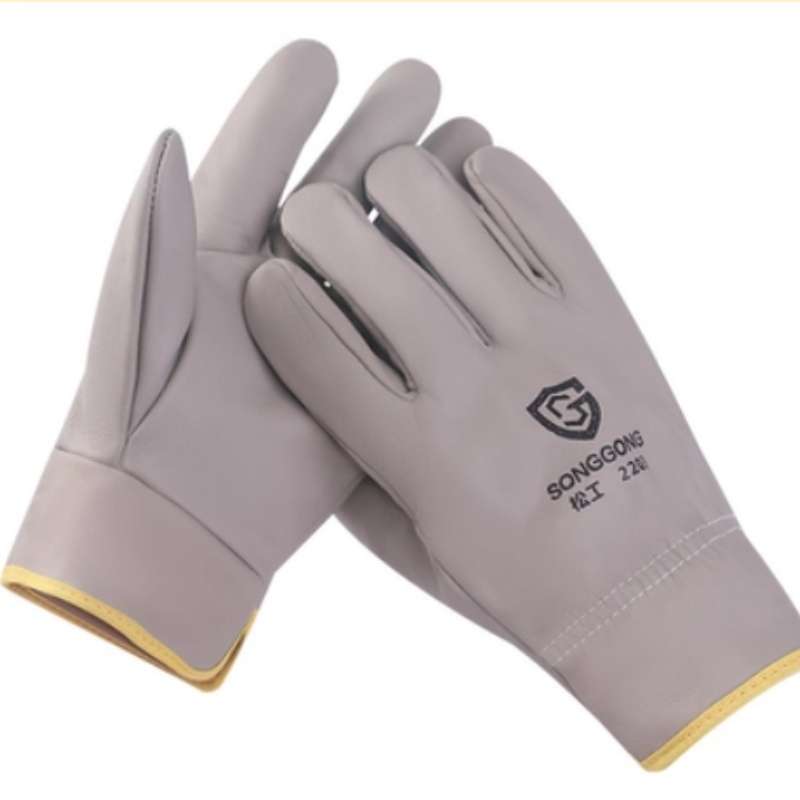
- Double-Layer Cowhide High-Temperature Protective Gloves: built for intense heat; excellent for short contact and handling hot coals.
- 10&14-Inch Full Cowhide Reinforced Gloves: a strong all-round choice with forearm coverage and reinforced seams—good for mixed shop tasks.
Use each where they make sense; rotating pairs extends life and maintains safety.
Final, Cautious Note
Science helps us pick and use welding gloves smarter, but rules aren’t universal. Test in safe conditions, make simple inspections, and pair your gear with sensible habits—short contact, tap-and-withdraw testing, and scheduled glove breaks. These small steps prevent most hand incidents.
Welding gloves are engineered shields—respect what they do and don’t do.