
When people say a pair of welding gloves protects you, that’s true—but incomplete. Protection isn’t binary. Instead, a glove creates a measurable delay between hot contact and skin pain. I call this the thermal dwell time: the seconds you get to react before injury. Understand it, and you use welding gloves proactively; ignore it, and you gamble. This article explains the physics behind dwell time, offers quick field tests you can run with your shop pairs, and gives conservative handling time rules.
What Thermal Dwell Time Is
Thermal dwell time is the interval between a hot object touching the glove’s outer surface and the heat reaching a skin-damaging temperature inside the glove. A good pair of welding gloves can buy you a few seconds or tens of seconds to loosen, reposition, or discard the hot component.
Why care? Because many handling tasks are short. If you know your welding gloves give you, say, 6–8 seconds on a 250°C contact before inner temperatures spike, you can design safer moves: grab, move to a tray, let go. That simple rhythm reduces burns and mistakes.
How Materials and Design Affect Dwell Time
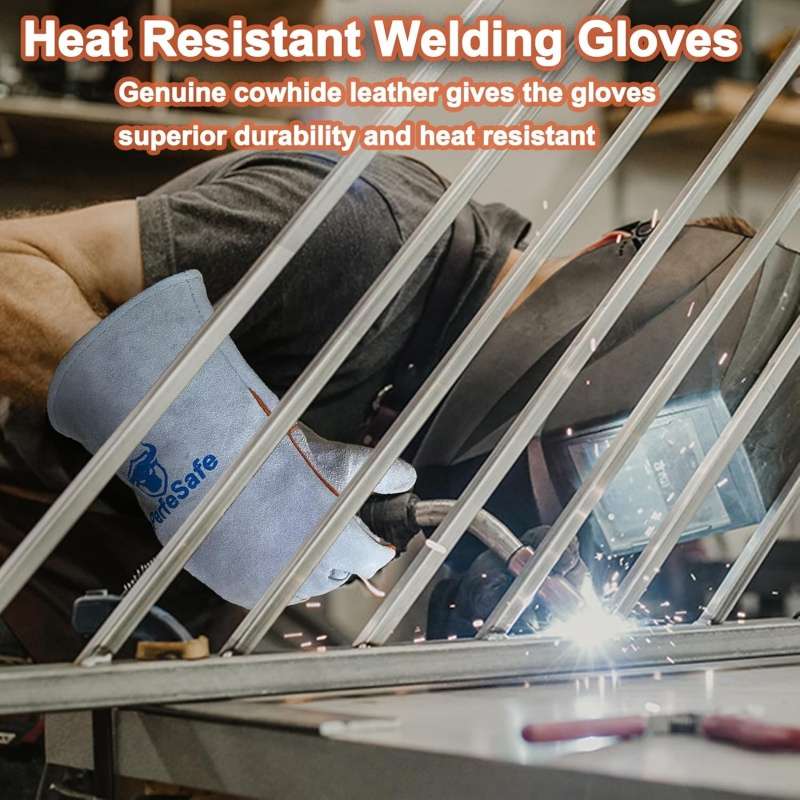
Three factors dominate dwell time for welding gloves:
- Outer material thermal conductivity—leather (cowhide) is low-conductivity compared with thin synthetics, so it’s inherently heat resistant for brief contact.
- Layer thickness and air gaps—double-layer designs trap insulating air and add thermal mass; they increase dwell time significantly.
- Inner liner and moisture—cotton liners add insulation when dry. Wet liners collapse thermal resistance and can halve dwell time. So dry matters.
That’s why the Double-Layer Cowhide High-Temperature Protective Gloves will show longer dwell than a single-layer palm glove. The Unisex Cowhide Leather Welding Gloves fall in-between: the long cuff and thick hide provide good protection but less thermal mass than a two-layer build.
Quick, Low-Tech Field Test You Can Run
Want a sense of your pair’s thermal dwell time without lab gear? Try this controlled check with a heated block:
- Heat a steel block to a measured temperature (start at ~200°C).
- Wear the tested welding gloves.
- Tap the block with the gloved palm for one-second intervals, increasing to two or three seconds, and note when you feel a distinct warm-through. Not pain—stop before that.
- Record the maximum safe contact time. Repeat twice to confirm.
You’ll likely see the double-layer model tolerate longer contact before warm-through. That empirical number is your personal dwell time for that glove at that temperature.
Practical Handling Limits (Conservative Rules)
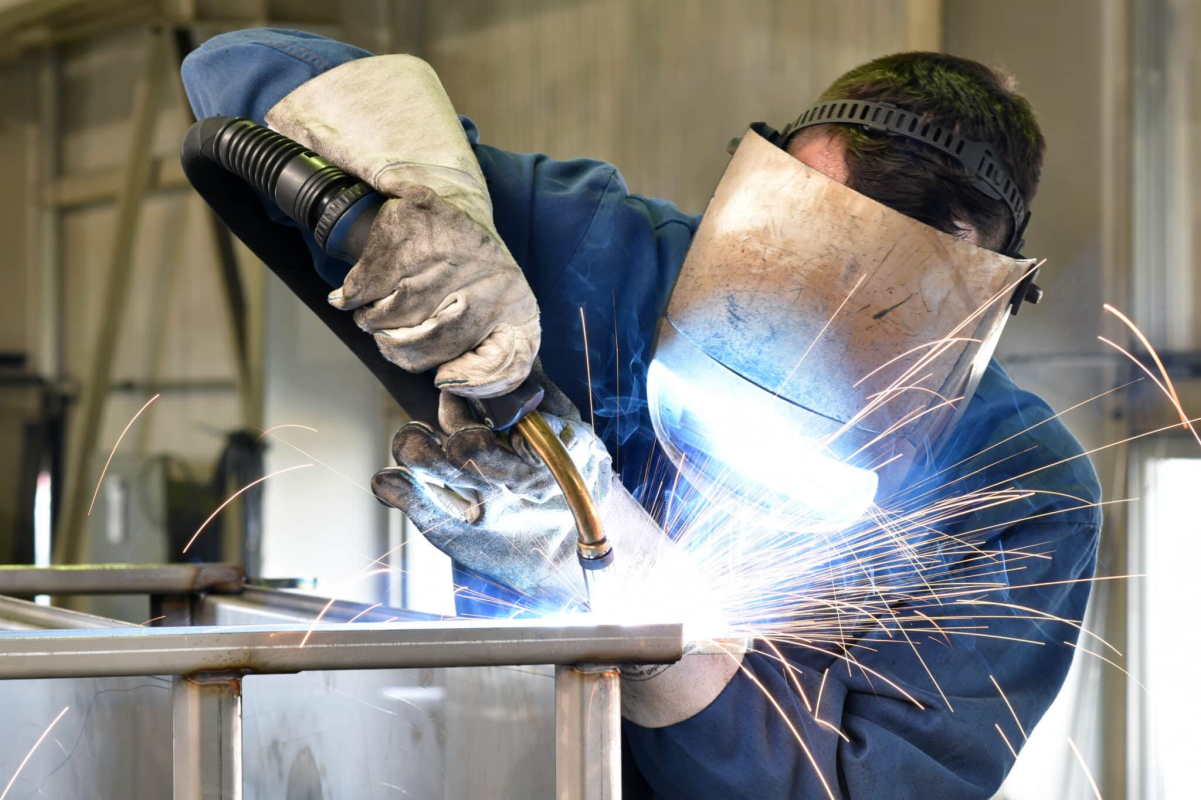
Turn your test into rules you can rely on. These are deliberately conservative:
- For brief contact with surfaces ≤250°C, assume welding gloves give 5–8 seconds of safe contact.
- For brief contact with surfaces at 250–500°C, assume 1–3 seconds for single-layer gloves and 3–6 seconds for double-layer cowhide.
- Never rely on dwell time for prolonged handling; use tongs or a cooling tray.
- Always account for liner moisture: if gloves are damp, reduce assumed dwell time by at least 50%.
These limits help you plan moves: don’t hold a hot handle hoping for miracles. Use the glove’s seconds to move, not to endure.
Application Across Common Processes (TIG / MIG / Stick)
- TIG: delicate work—minimal direct hot handling. Use gloves mainly for protection during occasional touches; rely on tools for repeated contacts.
- MIG: more spatter, more short hot grabs. A double-layer or thick cowhide glove gives useful dwell time for quick repositioning.
- Stick: heavy splatter and awkward parts. Favor long, high-mass gloves and keep contact times very short.
Understanding dwell time changes how you sequence tasks: for example, plan a MIG run so you can quickly move a hot clamp to a tray within the glove’s safe window.
Small Operational Tips That Save Fingers
- Keep a metal tray for immediate cooling; move hot parts into it within your glove’s dwell time.
- Rotate gloves to let liners dry—wet liners crush dwell.
- Use double-layer pairs for short direct contact and lighter cowhide for handling that needs more dexterity.
- Add a short, loud “drop” command in team lifts: if the handled object exceeds dwell, drop it immediately.
These habits convert knowledge into fewer incidents.
Final Thought—Gloves Are Timing Tools, Not Invincibility Charms
A pair of welding gloves does not make you immune; it gives you time. Treat that time as a resource and plan moves around it. Run the field test, record conservative numbers for your specific gloves, and design simple handling rhythms: tap-move-release within dwell. It’s basic and robust, and it keeps fingers intact.
Secure safer handling—shop heat-rated welding gloves like cowhide style.