
There’s a small art to owning welding gloves and not letting them own you. Too many makers treat gloves as a single, awkward tool—you shove them on, suffer a bit, and hope for the best. That’s not necessary. With two complementary pairs on the peg, your workflow smooths out: you grab the right protection for the moment and get back to making. This article is a practical, slightly opinionated playbook for pairing a bright, everyday glove with a heavy-duty keeper—and how that combo changes shop habits for the better.
Why Two Pairs Beat One
If you think about tasks, they fall into two categories: contact-and-move (hot grabs, brief handling) and hold-and-feel (clamping, filing, precision). One glove tries to be both and fails. Instead, treat welding gloves as a small toolkit: one nimble, visible pair for long sessions and one heavy, heat-resistant pair for short, risky moves. You swap quickly. No drama. Less sweating. Fewer fingers in the ER. Honestly, it’s that simple.
Meet the Pairs: Who Does What
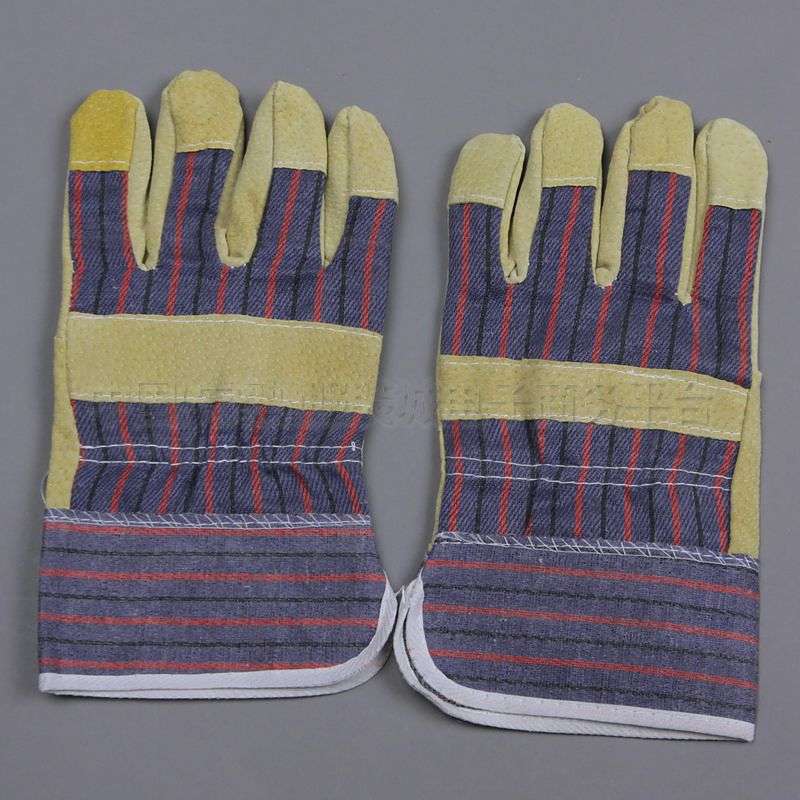
The first player is the Yellow Protective Leather Welding Gloves. Bright, budget-friendly, and surprisingly nimble—they make it obvious to anyone in the shop which pair to use for general handling. They’re good for repeated tasks where visibility and grip matter. Use them for MIG prep, grinding touch-ups, and for offering a quick, safe option to a helper at the bench.
The second is the Double-Layer Cowhide High-Temperature Protective Gloves. These are the heavy lifters—designed for brief contact with hot metal, stoking a forge, or moving coals at a barbecue. The double-layer build gives a real cushion against heat; you’ll notice the difference the moment you need to pick up something glowing.
Together, they cover most real-life needs better than a single compromise pair ever could.
A Simple Workflow: When to Swap, Really
Here’s a pattern you can adopt instantly:
- Start a session with the yellow pair on. Do setup, clamp, measure, and long runs. You stay cool and precise.
- When something gets red or the job requires direct handling of hot parts, swap to the double-layer cowhide pair. Move the part into a cooling tray.
- Swap back to the yellow pair for finish work and cleanup.
It sounds like extra steps. In practice, it makes you faster. Why? Because you avoid the fatigue and poor touch that come with a single, bulky glove. Changing gloves is a habit; it keeps the work area clean and minimizes errors, like zipping up a respirator before cutting.
Small Rituals That Make the System Stick
- Hang pairs on labeled hooks: “House/Shop” for yellow and “Hot Zone” for cowhide. The brain likes simple cues.
- Use color to enforce roles: yellow = general use and guest pair; darker cowhide = hot handling only. Guests intuitively avoid the heavy pair unless asked.
- Dry liners between swaps. Moisture shortens welding gloves’ protective time and kills grip. A five-minute airing works wonders.
These tiny rituals convert gear into a predictable part of your routine.
How This Pairing Affects Safety and Quality
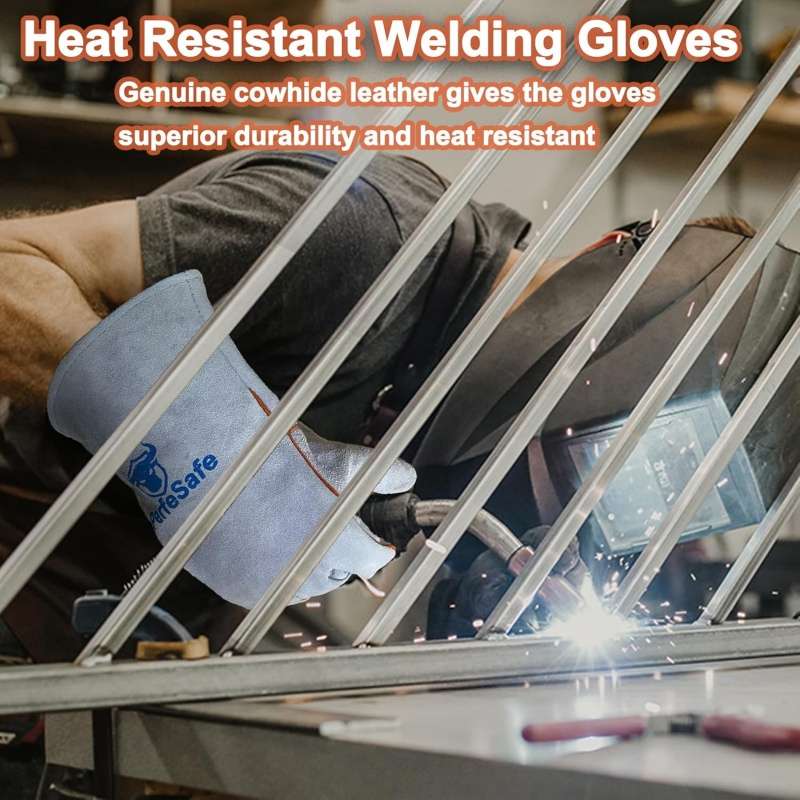
Two immediate wins: fewer accidental burns and fewer ruined finishes. With a dedicated heavy glove for hot grabs, you’re less likely to fumble glowing metal. With a nimble glove for long work, you get steadier hands and cleaner joints. Your bead quality improves because your control improves. And the visible yellow pair reduces the chance a helper or neighbor grabs the wrong glove during a barbecue.
There’s also a psychological gain: when gear is easy to find and intuitive to use, people pay attention. That attention prevents small errors that compound into expensive rework.
Care That Keeps Both Pairs Ready
No exotic maintenance required. But a few things matter:
- Keep the cowhide pair dry and condition lightly. That preserves the heat-resistant surface and prevents cracking. Don’t over-oil—the glove should not feel slick.
- Brush grit from the yellow pair; fabric backs breathe better when clean.
- Rotate pairs weekly if you weld often; rotation lets liners dry and evens wear.
Good care extends life and keeps the protective properties predictable. Want to make your gloves more durable and comfortable? [Check out our complete guide to welding glove care.]
Quick Buying Tip
When choosing either pair, favor fit and flexibility over marketing numbers. A glove that fits poorly will make you grip too hard and slow you down. The Yellow Protective Leather Welding Gloves are forgiving and visible—great for general handling and social tasks. The double-layer cowhide gives you confidence when heat matters. Try each pair with the tools you actually use: hold a file, a torch, or a spatula. If the glove destroys your feel, try a different size or cut.
Hands are personal. Don’t buy for the label; buy for how they let you move.
A Short Note on Community and Sharing
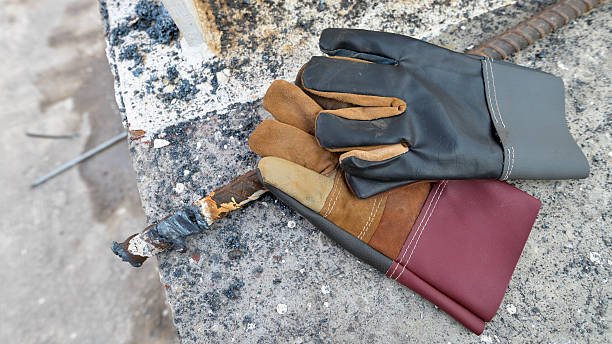
If you run a makerspace or host barbecues, this two-pair system scales. Keep labeled communal sets: one yellow rack for shared tasks and one cowhide rack near heaters and forges. Train members to swap and to dry liners. It’s an easy culture shift—no signage needed once people see the flow.
Final, Practical Takeaway
Stop thinking of welding gloves as an afterthought. Two suitable pairs of welding gloves can completely change your work habits—one lightweight, one thick. You’ll work cleaner, move faster, and risk less. The yellow pair keeps the long work comfortable and visible; the cowhide pair gives you the short, crucial seconds you need for hot handling. Invest in both. Practice the swap. Teach guests the rules. And then get back to the part you actually enjoy: making something that wasn’t there before.
Gear up with both yellow and double-layer welding gloves—shop protection for every task.